Case study · Apollo 24/7 & Apollo Pharmacy
Building the team first: year-long projects in six months
Transforming Apollo 24/7 and Apollo Pharmacy meant transforming the design team first. I staffed it properly, gave people real career paths and processes, and built a culture that shipped year-long projects in six months.
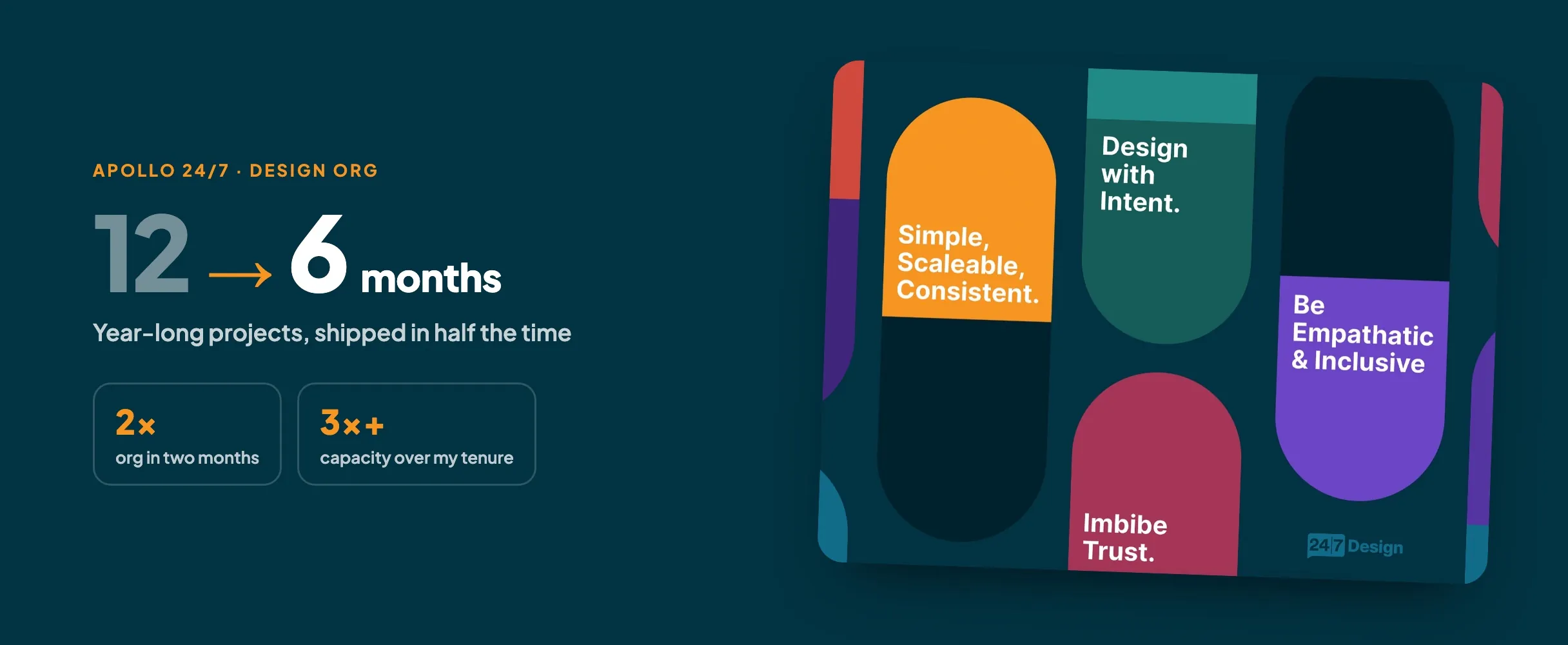
- 2×Org size in my first two months
- 3×+Team capacity over my tenure
- 12 → 6 moProject delivery time
The mandate
The products could only get better if the team did
I led a design team working across 5+ digital healthcare services, on iOS, Android, web and tablet. The mandate was ambitious: innovative products with real business results, without letting app-store ratings slip while we invested.
But on arrival, two problems stood out. The workload was unsustainable, and nobody could see how to grow. These were the people building our flagship products, so keeping them was the strategy.
Hiring & retention
Keep the people, then grow the team
I doubled the team in my first two months, staffing properly across UX, visual and product design, UX writing, design systems and accessibility. With my peers I built clear career paths, and within six months several designers moved into senior and lead roles along them.
I also partnered with executives across the company to make the team’s work visible. That gave the team a sense of mission and belonging, and its capacity grew 3×+ during my time there.
Operations
Growth needed an operating system
A bigger team without process is just more chaos, so the foundations came next:
- Sprints in step with techDesign sprints aligned with product and engineering, so planning moved as one.
- Visible workOne tracker for timelines and handoffs: speed with accountability.
- Review ritualsWeekly design reviews, daily stand-ups, retros and honest postmortems.
Craft
Growing the craft together
Once the team passed 10 designers, I started peer-to-peer learning sessions: documentation, UX writing, design systems, prototyping, research and critique. We workshopped the design principles together, and they became how the team made calls.
Results
Year-long projects, shipped in six months
With the right team, rituals and learning in place, we consistently shipped critical projects in half the time. Two initiatives carried most of it: shared design principles, and Capsule, our design system, which has its own case study. And we did it without dropping the score.
Lessons
What I’d take into the next role
Three lessons I’m taking with me.
- Keeping people is the first strategyCareer paths did more for delivery than any new process.
- Scale needs structureGrowth only paid off once sprints, tracking and reviews were in place.
- Teams grow by teaching each otherPeer learning raised the craft faster than top-down training.